Following a sumo tournament without Japanese
In-arena announcements and most signage are in Japanese. You are given a bout sheet (torikumi-hyo) at entry that lists the day's pairings. An English commentary radio is usually available to rent for a small fee, broadcasting during the top-division hours. Learning to recognise a handful of spoken cues covers most of what you need.
Whether the English commentary radio is offered, and its fee, can vary by tournament. Check with the venue on the day. Japan Sumo Association ↗
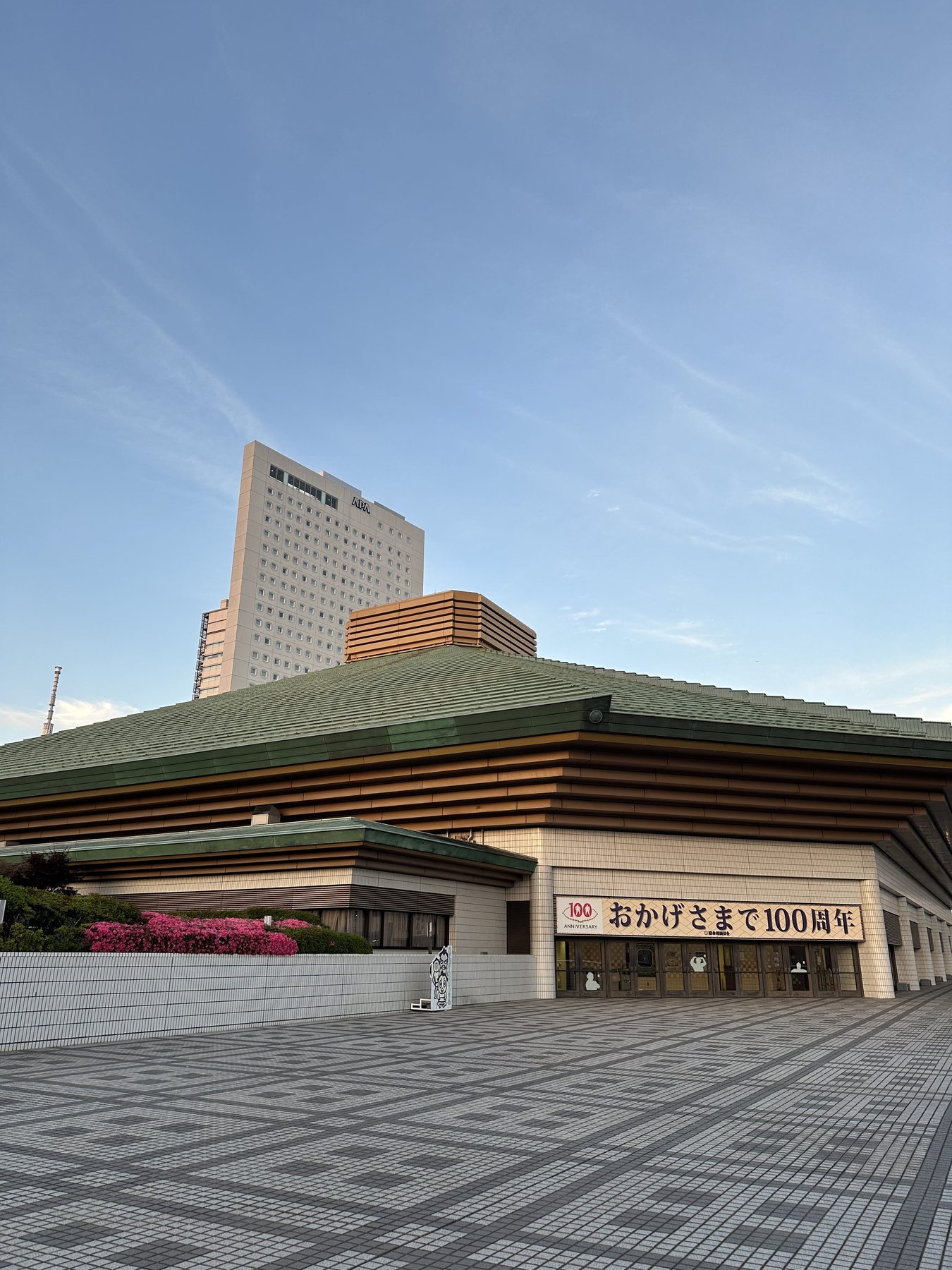
What you are seeing
- The bout sheet is the day's map: names, pairings, and roughly when the top division starts.
- The referee's calls and the ring announcer's introductions are in Japanese, with a fixed rhythm you start to recognise.
- Staff at the information counter can usually help in basic English.
What to watch next
- Listen for hakkeyoi and nokotta - the referee urging the wrestlers on and confirming a bout is still live.
- Listen for the crowd's yoisho as the yokozuna performs his entrance.
- Match names on your bout sheet to the wrestler you are following, so you know when he is up.
A common first-timer mistake
Assuming there will be English explanation in the hall. There is very little; the bout sheet and the radio are the tools.
Words you may hear
- Hakkeyoi
- the referee's call urging the wrestlers to keep fighting
- Nokotta
- 'still in' - the referee's call while a wrestler is still in the ring
- Torikumi-hyo
- the day's bout sheet, handed out at entry
Sources and review
Created and photographed in Ryogoku by a Tokyo-based spectator. Facts reviewed against Japan Sumo Association materials on 25 August 2026.