Zabuton-nage: why fans throw their cushions after a sumo upset
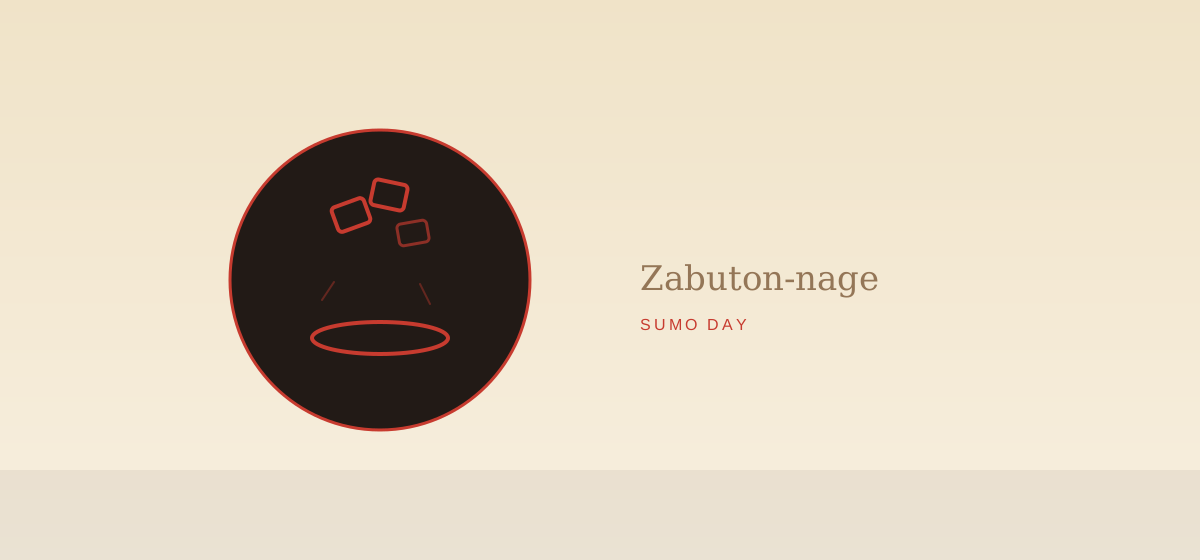
Zabuton-nage is the fan tradition of hurling seat cushions into the air after a shock result, most famously when a yokozuna loses to a much lower-ranked wrestler. It is not part of the official program - the venue makes announcements asking spectators not to throw their cushions, mainly because a hard cushion thrown from the upper rows can hurt the people below. The tradition persists anyway, especially on a tournament's biggest upset.
What you are seeing
- Before the day's final bouts, an arena announcement (in Japanese) asks the crowd not to throw their zabuton - a sign the staff already expect it might happen.
- If a heavy favorite, especially a yokozuna, loses unexpectedly late in the day, cushions can suddenly fly from the stands toward the ring from several directions at once.
- The outburst is short and spontaneous, usually settling within the length of a single bow or announcement.
What to watch next
- Scan the upper-level seats first if a major upset looks likely late in the day - that's usually where the first cushions go up.
- Some venues have tried tying two or three cushions together with cord so they are harder to throw; look at the cushion under you and you may notice it.
- Treat it as something to watch, not join - throwing your own cushion as a visitor goes directly against the announced request and can hurt someone seated below you.
A common first-timer mistake
Assuming the cushion-throwing is a planned part of the sumo spectacle, or that it only happens for a formal kinboshi upset. It is an unofficial, officially discouraged fan reaction to any sufficiently shocking result, not a scripted ceremony.
Words you may hear
- Zabuton
- the flat seat cushion provided at box and chair seats
- Zabuton-nage
- the tradition of throwing those cushions toward the ring after a shock upset
- Kinboshi
- a 'gold star' credited to a maegashira who beats a yokozuna - sumo's most common trigger for a cushion-throwing outburst
Sources and review
Created and photographed in Ryogoku by a Tokyo-based spectator. Facts reviewed against Japan Sumo Association materials on 25 August 2026.